


How Property Owners Lose Up to 40% of Direct Bookings and How to Fix It in 2025
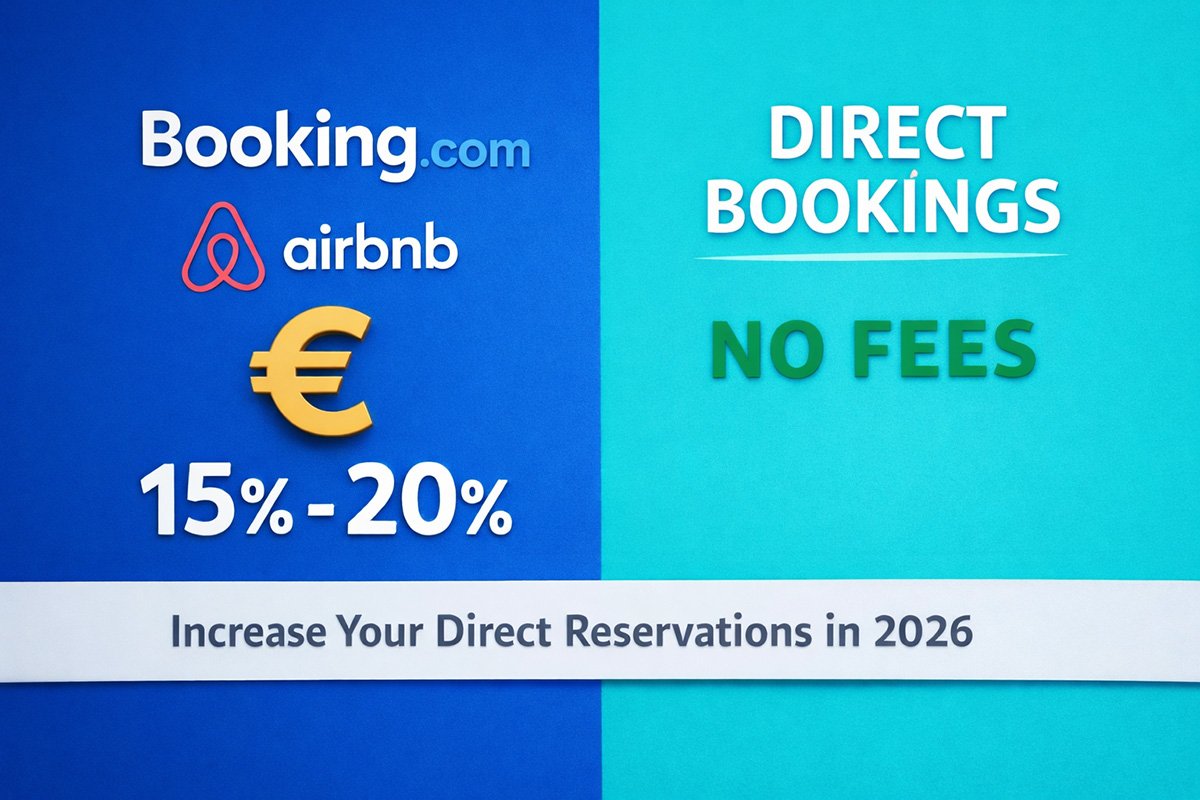
Today’s holiday rental market is more competitive than ever. Guests still rely heavily on Booking.com and Airbnb to discover accommodation, but a growing number of them search for the property name directly on Google before making a final decision.
This creates a major opportunity for increasing direct bookings, yet many property owners are not taking advantage of it. In fact, some lose up to 40% of direct booking opportunities simply because they lack essential elements of a professional online presence.
Below is a clear breakdown of what is happening and how you can fix it.
1. The number of guests searching for your property name is increasing, but results are missing
Based on trends from various tourism projects in coastal regions and European destinations, between 30% and 60% of guests who find you on Booking.com will later search for your apartment or villa on Google to:
-
check more detailed photos
-
compare direct prices without commission
-
contact you directly
-
learn more about location, beaches, amenities and rules
The problem occurs when the guest cannot find your official website or any verified source. In that case, the guest simply returns to Booking.com and you pay the commission even though the guest already intended to book with you directly.
2. Google has become the most important source of direct bookings
Years ago, direct inquiries mostly arrived by email or phone. Today, Google plays the central role.
Guests want trust, clarity and security. A professional website provides exactly that. Without a website or proper SEO optimization, you lose control over your brand and your sales process.
The result is simple. On average, 15% to 40% of potential direct guests never reach you.
3. Why property owners unintentionally lose reservations
The most common reasons include:
No official website
If guests search for you and cannot find you, the direct booking is lost.
A website that is not mobile friendly
Around 70% of guests browse exclusively on mobile devices.
Unaligned prices across platforms
If your website, Booking.com and Airbnb show different prices, guests lose confidence.
No direct calendar or booking form
Guests want to book now, not wait one or two days for your reply.
Missing multilingual support
English is fine for most travellers, but multilingual content increases trust and conversion.
Slow website loading
If your website does not load within three seconds, a large percentage of guests will abandon it.
4. Why investing in a professional website pays off
Holiday rental owners who use a modern, optimized website usually achieve:
-
significantly lower commission expenses, often saving between 1000 and 10 000 euros per year
-
higher numbers of direct bookings
-
better visibility on Google
-
more control over pricing and availability
-
a stable and predictable booking flow
A website is not just an optional upgrade. It is a tool that protects your revenue.
5. A real scenario from everyday practice
A guest finds your apartment on Booking.com.
The price seems high, they want to avoid the fee and check more photos.
They then search on Google:
“Apartment [property name] [destination]”
If they cannot find you, they return to Booking.com and you pay the commission.
If they find you, you receive a direct booking.
It is as simple as that.
6. How to prepare your property for more direct bookings
Every property owner should implement the following:
1) A professional website
Fast, modern, mobile optimized, with an integrated availability calendar.
2) Synchronization with Booking.com and Airbnb
Avoid double bookings and eliminate manual updating.
3) A FAQ section
Reduces repetitive communication and saves your time.
4) A simple and intuitive booking process
The fewer steps, the higher the conversion.
5) Google optimization
Clear titles, structured content, optimized images and fast loading times.
6) Professional photography
One of the strongest decision-making factors for guests.
Conclusion
Property owners are entering one of the most competitive periods in the rental industry. The difference between relying entirely on Booking.com and maintaining a stable stream of direct bookings often comes down to a single well-built website.
Guests are already searching for your property name on Google.
The only question is whether they will find you.